NEW! Sustainable Practices Course Offerings at Mother Lode River Center

In keeping with the Mother Lode River Center’s commitment to environmental stewardship, we are proud to announce the most recent addition to our Outdoor Education curriculum: Sustainable Practices; Experiential Education for a Changing Planet.

Beginning in 2007 the Mother Lode River Center enacted a Greenhouse Gas Action Plan (GAP) as a means of reducing our carbon footprint. Since then we have “walked the talk” and reduced our overall carbon emissions by 30%. This puts us ahead of our 2012 goal of a 20% reduction, and well on our way to achieving our 2020 goal of a 40% reduction.

In the process folks have been noticing our rapidly multiplying fleet of 100% waste vegetable oil powered vehicles which began with Eco-Bus, but this year will add Eco-MiniBus, Eco-Truck and Eco-Passat. Solar hot water heaters of various design types, and photovoltaic panels applied in a variety of ways, have been installed to illustrate the full spectrum of solar power technology. This year our on-site organic garden adds a new solar powered root zone heating system and a high-tech greenhouse augmented by thermal mass. Our current goal is to achieve a 50% overall reduction of our carbon footprint by the end of the 2009 season and to ultimately create an “Eco-Village”. (Check out the ECOS blog for details.)

When many of our guests expressed interest in these different projects, the decision was made to share our experiences with you. Guided by our solar guru, Allen Carrozza, who is a true solar expert with over thirty years of experience in the field, we comparative rookies are acquiring lots of practical knowledge. We are enthusiastic about passing it on to others. The more we learn though, the more we realize that most of these ideas aren’t new. The ancient Greeks used solar hot water heating, organic gardening is how the ancients used to do it, and the first diesel engine was designed by Rudolf Diesel in 1897 to run on peanut oil.

The real challenge is to learn to live in ways that adapt to the needs of a changing planet. Our Manager, Greg Hawkins, put it well: “A revolution does not begin with the formation of a new idea, but with its implementation.”

How Sustainable Practices Works:
As with all our programs, Sustainable Practices is designed to be hands-on and can be tailored to meet the needs of youth and/or adults. You can combine it with one or more of our other programs to create fun and informative multi-day adventures. Or, spend the day at our camp on the American River and learn how a little creativity and initiative can result in dramatic changes in your use of energy, and the various ways we can all reduce our impact on the ecosystems that support us all.

Come Join Us at Mother Lode and Help Build Tomorrow, Today!
Sustainable Practices home page

2009 Rafting Flows Confirmed!

Rafting Stimulus Package: Recent Storms Guarantee Great 2009 Rafting!

A wise old river rafter once told me that the snow pack in the Sierras is largely built by three major storms each season. One storm more or less often determines whether a particular season is normal, below normal, or wet in nature. Attempting to predict the outcome is therefore a risky business. It is wiser to relax and just see what happens. It isn’t over ‘till it’s over.

Once again this observation has proven true. While just a few weeks ago the concern was about critical drought conditions, now, one big storm later, the snow pack that feeds the American River is at 101% of normal. Once quiescent, all three Forks of the American River are swollen bright red with runoff. In fact, the North Fork briefly peaked at 11,000cfs. That’s three times safe boating flows.

Bottom line: It is going to be another great season for rafting on the American River! It is time to get out your river gear, Spring boating has arrived.

American River rafting trip options

This is another example of why drought conditions in California as a whole do not prevent rafting on dam-controlled rivers such as the South and Middle Forks of the American River. The South Fork, for example, has multiple reservoirs upstream of Chili Bar that are controlled by the Sacramento Municipal Utility District (SMUD) and are collectively referred to as the Upper American River Project (UARP). Because of the FERC re-licensing process that ended in 2007 with the acceptance of the Alternative Proposal, the South Fork was guaranteed to have good rafting flows this season, even before this recent storm. In fact, this agreement now provides for predictable recreational flows for rafting for the next 50 years.

Now here is the truly great news, while climate change may diminish snow pack levels in the future, and population increases will undoubtedly increase demand on dwindling water supplies, even in “super dry” years there are 5 days of guaranteed water flow for boating on the South Fork. That means Thursday through Monday, from Memorial Day to Labor Day, we can count on good flows that begin and end at specific times of the day, even in the worst drought years ever recorded! Furthermore, 90% of boaters would choose the period in which the flows are guaranteed anyway. That means that even in the worst of times, boating is great on the South Fork of the American. This river has the most reliable water flows of any Class III whitewater river in the West!

One more remarkable fact: The total volume of water that flows down the river is not affected by rafting. No one will go thirsty as a result of your boating the river. The only effect of this agreement was to alter the timing of the release of a relatively small amount of this water, approximately 2% of the total, with the result that a huge amount of recreation results from a relatively small change in the release regimen. This is a win, win situation that benefits recreation, fish, wildlife and also SMUD itself by building a reservoir of valuable community support. Thank you SMUD! We all hope for a similarly favorable outcome on the re-licensing of the Middle Fork of the American, which is currently under way with PG&E.

See you on all three Forks of the American River this season,
Scott the River Doc and the MaLode Crew

The Garden: Weeding Out Greenwash

Shoveling:

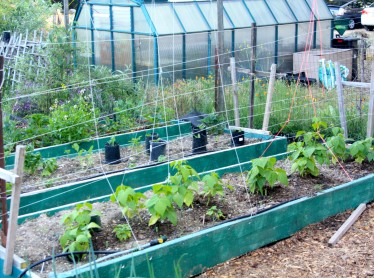
It’s been pouring rain here for the last few weeks, and during the small breaks in the storm, we’ve managed to put some of the finishing touches on our garden expansion. We’ve also started seeds in the greenhouse–carrots, broccoli, lettuce, peas, tomatoes, corn, and herbs of all sorts are all getting off to a good start. But I have to admit, a few days ago, after lifting what felt like the 10,000th heavy shovel full of wet soil, I couldn’t help thinking, “Why exactly are we doing this again?” Sure, it’s nice to eat garden fresh vegetables on your river trip, and most of us have heard that eating locally grown, organic food is “green”, but in a world awash in “green” rhetoric, it’d be nice to know how this project actually helps us achieve our goals.

Promoting Healthy People:
So is a tomato or ear of corn grown in a small scale organic garden like ours more healthy than their store-bought counterparts? To put it bluntly, yes. Big time. There are several reasons for this, one of them being the harvesting and shipping factors involved in large scale operations. Store bought produce, even certified organic varieties, must be shipped to stores an average of 1,500 miles, which can mean weeks in a box. Time is the biggest thief of nutrients, with some vegetable varieties losing up to 50% within three days of being picked. Another factor is ripeness; farmers can’t harvest at the peak of a crop’s ripeness, leading to comparatively tasteless, less nutritious produce. According to Robert Shewfelt, professor of food science at the University of Georgia, “When you pick something at peak flavor, it is about the same as picking it at peak nutritional value.” Studies have also shown that produce loses significant nutrition from bruising during mechanized harvesting and shipping processes that damage cell walls, allowing nutrients to escape and oxidation to occur.

Another reason for nutritional disparity is the difference in soil quality and quantity. For over 70 years, soil scientists from the USDA have been warning farmers about the rapid depletion of soil and soil nutrients due to unsustainable farming practices. And the fact is that today, the average depth of topsoil on North American cropland has diminished from around 21 inches down to 6 inches. At the Earth Summit Statistics Meeting in 1992, research showed that farmland in the US is 85% micro-nutrient depleted. By continually building up our own soil with compost generated by our guests and rotating crops properly we can keep growing nutritionally superior crops here at camp.

The produce grown in the US contains as little as 62% of the nutritional value of that produced in 1950. This is partly because on large farms, modern crops that grow larger and faster are not necessarily able to acquire nutrients from the soil at the same, faster rate. A good analogy is a body builder all pumped up on steroids; while it may look impressive and fit, many of the muscles have absolutely no utility and the bodybuilder isn’t necessarily healthy. It’s the same for mass produced crops. They’ve been selected for their yield, size, and speed of ripening traits, not for healthy root systems, which absorb more nutrients. Information about this “dilution effect” has been available for almost 30 years, but there have been no reforms in government to encourage farmers to grow healthier crops, only incentives for them to grow more and more crops. Factor that in with less, nutrient depleted soil, and you have a crop containing as little as 62% of the nutritional value as that produced in 1950.

A more hidden aspect of the nutritional deficiency in standard crops is lack of diversity. Different varieties (cultivars) of the same vegetable vary widely in the amount of nutrients they contain. A researcher named Eitenmiller studied the nutrient composition of different types of apples, peaches and other fruit, for example, they found variation in Vitamin A levels as high as 20 times. Another food scientist, Robert Shewfeld reports that carotene levels in any given vegetable often vary by a factor of 10. It is easier to grow a larger variety of crops in a small scale operation because you can monitor each type and adjust watering and feeding for their specific needs. Last year at Mother Lode for instance we grew 8 different types of tomatoes and plan to grow even more varieties this year.

Living in Equitable Communities:

Our garden program addresses that goal by educating our guests about the process of growing food in a sustainable way and empowering them to go and do it themselves. There have been several studies on the benefits of garden programs in schools, almost all of which show positive behavioral changes towards eating healthier, even in the absence of positive attitudinal changes. Twenty of these studies can be viewed here.

Our garden curricullum focuses on methods that anyone can use, whether they live in urban or rural environments, even in areas with poor or depleted soils. One example is our simple raised planter boxes that anyone can build. in which we will be replicating a method of gardening developed by gardening guru Jacob Mittleider. Previously unusable soil is built without chemicals by adding nutients and organic materials. Mittleider’s method’s have utilized vast amounts of what was once considered unusable land, especially in 3rd world countries. Another example we teach about is hay bale gardening, possibly the easiest way to start a growing crops on your own.

Living in Balance with the Natural World

Henry Brockman, a small-scale organic farmer and author from Illinois rightly asserts in his book Organic Matters that we must produce food “in a way that enhances life,” and “instead of a vicious cycle, create a virtuous cycle.”

One strategy we use to accomplish this is by designing a permaculture garden. Permaculture, in short, is the harmonious integration of design with ecology. The use of long-living food crops like fruit and nut trees is an important part, as well as fostering the ecosystem in which you live. Sometimes this is counter-intuitive. Hornworms are a common problem for most people who grow tomatoes, including here at Mother Lode, but what we learned is that they aren’t just a pest designed to spoil crops, they actually were here long before we decided to plant crops. Hornworms are the pupa form of the Sphinx moth, which pollinates the evening primrose flowers growing in the riparian habitat. So instead of killing them as I was taught to do as a kid to protect our tomatoes, it makes more sense ecologically to transport them to the stands of primroses near the river, where they can continue playing their role in the ecosystem.

Another similarly related view that we’ve gleaned from is biodynamic agriculture, a creation of Rudolph Steiner which looks upon the soil and the farm as living organisms. Biodynamics puts heavy emphasis on composting and soil preparation and maintenance that supports abundant microbial life. These microorganisms are responsible for a wide variety of beneficial processes, from breaking down complex compounds into simpler ones that plants can use, to fixing nitrogen from the air in a form available to plants, to devouring harmful nematodes. This living, pulsation in the soil preserves its vitality for the plants in
another way too; they tie up essential nutients in their bodies and then release them slowly as they die and decompose. Using the methods of biodynamics will help us revitalize our soil instead of continuing to exhaust it.

Back to Shoveling:
The shovel feels a bit lighter after considering all the reasons why we’ve undertaken this project. Growing our own, healthier crops for us and our guests to enjoy, and growing them in a way that preserves and even benefits the surrounding ecosystems is definitely worth all the work and research. We hope to see you here on the river (or in the garden on the river) soon.

MaLode Urges Eco-Approach to Health

Toward an Ecological Approach to Health
Scott Underwood, M.D.

In the United States human health has traditionally been viewed in isolation from its ecological context. During my medical training and subsequent career in Emergency Medicine, issues such as climate change, habitat destruction, species extinction, pollution and the depletion of fresh water supplies were treated as primarily environmental issues lying outside the realm of the medical industry. Equity has been seen as a primarily political, economic and social issue. Sustainability was rarely considered.

I believe this view must be changed and that not only physicians, but all Americans, have a responsibility to effect this change. Achieving health requires that we address all these elements in an integrated, ecological approach. Our goal should to be “healthy people, living in equitable and sustainable societies, in balance with the natural world”. Ignoring any of these elements has profound and unacceptable consequences.

Few people have anticipated these consequences better than my biology professor at Stanford University, Dr. Paul Ehrlich, considered by many to be the father of American ecology. Winner of the Crafoord Prize, the equivalent to the Nobel Prize for his pioneering work in the field of ecology, Dr. Ehrlich delivered an extraordinary speech that was, in effect, an urgent call for an ecological approach to health. I encourage you to click here to listen to this speech delivered in 1970. I think you will be amazed at how contemporary and compelling it is today, nearly forty years later.

I would argue, however, that one of the best examples of the implementation of some of the elements of an ecological approach to health actually anticipated Dr. Ehrlich’s speech by several decades. As a U.S. Army dependent, I traveled to Japan in 1946 with my family to spend three years as my father participated in the effort led by General Douglass MacArthur to implement the Marshall Plan in Japan after World War II. Although most Americans have understood the Marshall Plan as a program of financial assistance, it is less well known that its approach was systems based, comprehensive and consisted of three distinct components: Democratization, Decentralization and Demilitarization. In order to implement the “three Ds”, MacArthur took sweeping actions that affected every aspect of Japanese society. For example, his approach to Decentralization reflected an understanding that the concentration of wealth and power in the giant family run industrial monopolies, the Zaibatsu, had played a crucial role in the genesis of Japanese fascism. These monopolies controlled the Japanese economy and had, among other things, eliminated labor unions. MacArthur dissolved these monopolies and addressed their extreme concentration of wealth by imposing a minimum wage, a maximum wage and by redistributing the Zaibatsu’s wealth. He also brought about universal access to health care. The eventual result of these measures was the transformation of Japan from a nation with one of the largest gaps between rich and poor and the worst health indices (longevity, infant mortality, etc.) in the world, into the Japan of today. Japan is now the nation with the best health indices, and the smallest gap between rich and poor in the industrialized world.

Given the present challenges we face as Americans, let us consider what has happened in the United States during this same period. While our nation was 5th in the world in 1950 in terms of health indices, and had a relatively small gap between rich and poor and a growing middle class, these trends have since been reversed. Today our comparative health indices are no better than 21st, below all other developed nations, Costa Rica and Cuba. The gap between rich and poor in our country is now the largest in any industrialized nation. During the same period our expenditures on health care have exploded. The United States now spends over half of all the money spent on health care in the world, the highest per capita of any nation, while representing only 4% of the world’s population. By contrast, Japan spends the lowest amount per capita on health care among the industrialized nations of the world, while achieving the best health indices.

Another very different society that employs important aspects of an ecologically sound approach to health is the nation of Bhutan, located in the Himalayan Mountains near Nepal. Although Bhutan admits very few visitors in an effort to preserve its cultural traditions, over the past two winters Mary and Phil of DeRiemer Adventure Kayaking were granted permission to lead groups of kayakers to explore the rivers of Bhutan. I encourage you to visit their website for details of their travels.

The importance of their experience from the perspective of an ecological approach to health is that the Bhutanese people, who are materially poor by American standards, are comparatively physically and spiritually healthy. To paraphrase Mary and Phil, “the definition of happiness in Bhutan is not ‘having and getting,’ rather in their culture wealth has little to do with being happy. On the contrary, they believe that desiring and wanting often cause suffering. This principle is an underlying motivator of behavior with the result that their culture is open, loving, curious and accepting. Their government pursues the ‘gross national happiness’ and to promote happiness the government engages in implementing model educational, social and environmental programs that take into account the desire to protect the country’s environment and cultural traditions.”

The far off Kingdom of Bhutan and the concept of the “Gross National Happiness” may seem esoteric to many Americans. Nevertheless, over 400 respected U.S. economists including Nobel Laureate Professor Herbert Simon contend that it would actually be more realistic and useful to substitute for our use of the Gross Domestic Product (the total of all goods and services produced) the measurement of the Genuine Progress Index, which attempts to measure the quality of our lives. Comparing these measures during the period since the 1970s is revealing. While the conventional GDProduct more than doubled, the Genuine Progress Index declined 45% during this period. Measuring the GPI would have warned us that, contrary to the many assurances to the contrary, the U.S. economy was actually undermining our health during this period. Not only was our prosperity unevenly distributed and unsustainable, it was not performing its most important function. That function is to support improvements in the health of our population.

Clearly, an ecological, scientific approach to health demands that we define what health is, how best to measure it, and then promote the conditions that achieve it. If we do not do these things, it stands to reason we will be unsuccessful in attaining health. We must recognize that health is more than just the absence of disease. On the contrary, it requires doing things that actively promote it. It is not enough to attempt to correct the effects of doing things that destroy it.

At Mother Lode it is our continuing commitment to contribute toward this effort, one river based experience, one letter, one environmentally and socially responsible act at a time.  We hope you will bring your ideas and suggestions, and help explore the possibilities. Remember, recreation is just that: “re-creation”, a process by which meaningful, constructive change occurs and a vital part of an integrated and ecological approach to health.

See you on the river!
Scott the RiverDoc, Charlie the RiverDog and the MaLode Ecowarrior Clan