Sorting Through the “Green” Stuff at MaLode

There is a lot to learn about making your home, business or lifestyle “Green”. Here at the River Center we have discovered that if you want to learn how to save money and reduce fossil fuel consumption most cost effectively, it pays to stop listening and start thinking. Yes, more information is good, but so much of it consists of confusing “infomercials” for a new kind of “Green Consumerism”.

Take energy for instance. In 2007 when we drew up our Greenhouse Gas Action Plan (GAP) we were aware that most folks associated solar energy with photovoltaic (PV) panels. In fact, our neighbor had recently installed a fancy new set of PV panels that made us, quite frankly, envious. We heard there were tax credits and good deals to be had, and dreams of PV panels began dancing in our heads.

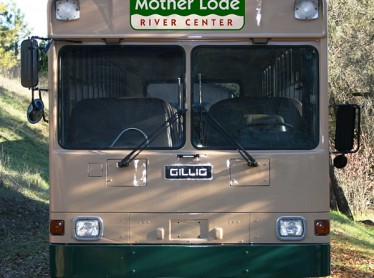
Then we did the math. Once we ranked the sources of our greenhouse gas emissions in the GAP, we discovered that not only was our use of electricity comparatively low, it largely came from pre-existing hydroelectric sources which produced very little new greenhouse gas to operate. In fact, most of our greenhouse gases were coming out of the tailpipes of our vehicles, not from our electric pole. This led to the EcoBus and our fleet of vehicles powered by waste vegetable oil (WVO), a fuel that produces 80% less carbon emissions than conventional fossil fuel.

Furthermore, we discovered that after vehicle fuel, our next largest producer of greenhouse gases was the heating of hot water with the fossil fuel, propane. Alan Carrozza, our solar expert, then suggested that after insulation, solar hot water heating was our next logical energy investment and that it would be much more cost efficient than PV electricity.

This motivated our first solar water heater, a simple “passive” system that cost approximately $1500 and which produced 28,750 BTUs of energy daily. To compare this system to PV we convert BTUs, a measure of thermal energy, into to kilowatt-hours by multiplying by the factor .0002931, resulting in 8.43 kilowatts. An 8.4 KW photovoltaic system would cost approximately $1000 per kilowatt or $84,000. Bottom line, the solar hot water heater produces the same energy 56 times more cost efficiently than the PV panels!

Just for a point of reference, we asked our neighbor if they had installed a solar hot water heater since, like the average American homeowner, over 33% of their energy is used to heat water. Predictably, the answer was no.

How could this be? These folks are not dumb; on the contrary, they are very smart, idealistic, and trying to do the right thing. What we realized, however, was that they were just like us, at risk of becoming victims of “Green Consumerism”. Like other forms of consumerism, the green variety claims that if it costs a lot, is fashionable, and or looks green, it must be green. Clearly, this isn’t true. BP and its “beyond petroleum” advertising campaign are a great example of “green consumerism” and it is no coincidence that they are the largest seller of PV panels in the US, yet they don’t sell solar hot water heaters at all. Why? Less profit!

We learned several things from this experience. One is that the mantra, “Reduce, Reuse, Recycle” is actually very logically sequenced. Unless we Reduce what we consume first, the Reuse and Recycle have a hard time reducing the net impact on the planet. As the video “The Story of Stuff” points out, the stuff we already produce would require 5 planet Earths to be sustainable. Furthermore, when we produce stuff, it is always “Toxins in, Toxins out” and those toxins always end up somewhere. Since toxins concentrate in biological systems, it turns out that human breast milk has the highest concentration of toxins of any food we consume. Wait a minute, can that be right? Check it out at www.storyofstuff.com. Once you do, you will probably agree that we should all take the advice of Daniel Goleman who proposes in his book, Ecological Intelligence, that we do the math and determine the total ecological cost of everything we buy, and let these numbers guide our purchases.

So what does this all mean at MaLode? No doubt it won’t surprise you that we now heat all our hot water at MaLode with solar energy. This requires three separate solar heaters of two basic types: active and passive. Each system “pre-heats” the water from the well with solar energy before it goes into a propane water heater. This ensures that the hot water is at the desired temperature and neither too cold (it is warmed up with propane to the target temperature), or too hot (it is cooled down by being mixed with more cold water). The passive system is best suited for a lower volume use such as the kitchens. Both types of system reduce propane use by approximately 70%.

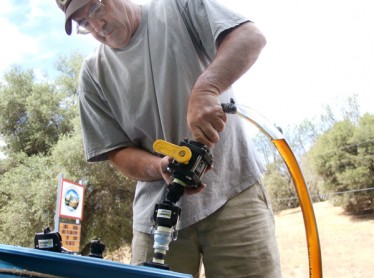
We are particularly proud of the “active” system that powers the showers and which was designed by Alan Carrozza (pictured on the left) and completed last winter by our tenant, Cornelius (on the right). In this case an electronic brain senses the temperature in the solar hot water heating panels. If the temperature is higher than the water stored in the solar hot water reservoir tank, an electric pump is activated to circulate the water from the panels to the solar reservoir. This system can produce more hot water than the passive system, which is why we chose it for the showers where we encounter our highest volume of hot water use.

So ends another happy chapter at MaLode. We are excited about moving forward, albeit deliberately, toward energy independence and ecological sustainability. This season one of our guests suggested that we use a super efficient steam engine he has invented, which derives its energy from solar thermal panels, to turn an electric generator that would produce our electricity. Hmmm, Stay tuned. In the meantime, we look forward to your next visit and, by the way, use all the hot water you want. That is, if you can wring it out of the low flow showerheads donated to us by PG&E!

See you on the River,
Scott and the MaLode Crew

“Solar for Oil” Barter: It’s very Cool

by Scott Underwood

Short on cash? Wouldn’t you like to find a way to reduce your utility bills, decrease America’s dependence on foreign oil, and do a favor to the environment by decreasing your use of fossil fuels? If you answered “yes” to any of these questions, you should be interested in what the Mother Lode River Center has been up to recently in nearby Cool, California.

The basic idea is simple. First, we construct a homemade “box” hot water heater from a sheet of plywood, an old retired propane water heater, a cast off shower door and some fittings from the hardware store. We plumb it all together with simple hand tools using plans available for free on the Internet. We then install it as a “pre-heater” to feed into the existing water heater at one of our favorite restaurants in nearby Cool, Ca.  This reduces the restaurant’s use of propane to heat water by 70%. Since over 33% of the energy consumed by an average household is to heat water, this cost savings and major reduction in carbon footprint is available to you too. I hope you agree that we have closed a Cool deal.  But hey, it gets better!

This restaurant uses vegetable oil to fry its food and normally pays to get it hauled off. We then barter the hot water heater for the restaurant’s waste vegetable oil (WVO).  Barter is “the exchange of goods or services without money” and is definitely a good thing because it keeps trade close to home.  Mother Lode is one of the few companies in California that runs its diesel vehicles on 100% WVO. This has several advantages. First, it produces 80% less carbon dioxide than conventional fossil fuel diesel and therefore vastly reduces our carbon footprint. Second, using WVO also reduces the particulates (the greatest disadvantage of diesel engines) by 45% and hydrocarbons by a comparable amount. Amazingly, it also reduces carcinogens by 90%. Bottom line, it is one of the cleanest and ecologically responsible fuels on planet Earth.

That’s it, “Solar for Oil”! We have created Green Collar employment for our staff, reduced greenhouse gas emissions and spared the planet’s ecosystems, helped reduce the concentration of chemicals in the air that cause asthma and cancer, and refused to ride with Osama Bin Laden. Do you support this idea? Write us a note and let us know what you think.

Mother Lode's 100% WVO Fleet

Many thanks to Alan Carrozza for his inspiration and great idea, Greg Hawkins for his construction skills, Ray and Lorrie for their patience and Emily for her photos.

Photovoltaic Solar Green Energy to Power the SEE

Solar Energy Exploratorium Heats Up

Today we added PV (photovoltaics) to the Solar Energy Exploratorium! Notice the two new PV panels located just above the solar hot water heater that Greg and Charlie are standing next to. As we mentioned last week in this blog, the thermal hot water heater pictured here is capable of pumping out 28,750 BTUs of solar energy and we are pleased to report it is now successfully heating the water for both our kitchens and guide shower.

The addition of the photovoltaic (PV) panels is to provide electricity for the SEE. This PV system is linked to a highly efficient electrolyte “gel” based battery. The set-up has the advantage of being fully portable and truly being “off the grid” from the moment it is plugged in. Unlike a “grid linked system” that depends on external power, this system has no need to be connected to PG&E; to provide electricity,

We will use the PV/battery system to power the SEE’s computer that will allow our students to do such things as: Estimate the carbon footprint of their home, school or community; Explore educational websites such as the National Alternative Energy Lab; Fire off emails supporting their favorite solar power legislative initiatives; etc!

Needless to say, the excitement has been building around here as the UPS driver delivers new solar toys for the SEE almost every day. Our “hybrid” solar oven is a particularly interesting addition because it combines direct thermal solar heat concentrated by reflective surfaces with electrically generated heat. We can now run the electrical portion of it with our PV / battery system and be entirely solared powered even on cloudy days.

Our solar race cars have also arrived and are quite a hit with the guides who are, after all, just kids at heart. The photovoltaic cell powered image projectors are quite mesmerizing and remind some of us of the Avalon Ballroom during its glory days. We have also been busy using our new planetarium to demonstrate the effects of the seasons, the longitude of ones location, and the degree to which your solar panel faces south to estimate solar energy yields. So far our calculations reveal that based upon our latitude and weather, Californians can replace an average of 73% of their hot water heating energy with thermal solar water heaters. We can also demonstrate that a seemingly very small area of concentrating solar arrays or PV panels located in Nevada would provide enough energy for all the electrical needs of the USA. This is fun stuff!

Today we had confirmation of another exciting development. Soon we will be using our new PV panels to recharge a full size, for real, solar car! This four passenger car is entirely electrically driven, has highway capability, and has the very appropriate California license plate “PLUGRIN”. We anticipate using the car to give our students rides on the property to demonstrate that powering a car with the sun really does work. I will make a special trip to Santa Barbara to pick up the car, which is generously being loaned by the famous solar energy enthusiast Dorothy Pierce. Thanks Nana!

Speaking of solar enthusiasts and heros, none of our solar projects would be possible without the expertise and generosity of Allen Carrozza, our solar guru who has loaned us all of the solar panels for educational purposes. Allen loves to share his vast knowledge of solar technology with others and is looking forward helping the River Center spread the word about solar power as part of the Sustainable Practices Institute. We also thank Daneille Fisher and the folks at Grange on Green for their support.

By the way, if you are a schoolteacher, keep in mind that students aren’t the only ones that will benefit from our programs. We plan to “teach the teachers” about solar power too. If you would like to “bring on home” the solar energy buzz to your own classroom, what better place to attend a seminar than here on the American River where you can combine your learning with whitewater rafting, camping and other forms of recreation such as petting Charlie the River Dog.

Warm Solar Greetings from the American River,

Scott, Allen, Greg, Daneille and Charlie the River Dog

Alternative Energy Education on the American River

28,750 BTU Solar Hot Water Heater at MaLode

Solar Energy Exploratorium: Alternative Energy Education on the American River

The purpose of the Solar Energy Exploratorium (SEE) is to provide our students hands-on opportunities to encounter the many ways solar energy impacts our daily lives and the phenomenal potential solar power has to transform our society in positive ways. Our food, the weather, the hydrologic cycle that provides and purifies the water we drink, even the fossil fuels we burn in our cars, all ultimately derive their energy source from the sun.

Today, the United States currently employs among the lowest percentages of solar power use in the industrialized world, less than 1%. Yet solar is one of the fastest growing and potentially the most promising type of energy that provides an environmentally sensible alternative to the fossils fuels that are creating so many problems for our society. In fact, if properly developed, solar energy could provide 65% of our total energy needs by the year 2050 (Scientific American January 2008 issue). Unfortunately, the type of solar power that has the greatest potential to achieve this, concentrating solar, is largely unknown to the American public and benefits from virtually no public policy support. At the Exploratorium you will have an opportunity to understand how this can and should be changed.

Another solar option we are all familiar with, photovoltaic cells, have quadrupled in energy efficiency from 3% to 12% in the past decade and will undoubtedly also contribute significantly to the coming solar transformation. While concentrating solar is installed as “solar farms”, PV cells are easily installed in a decentralized or “distributed” fashion that allows individuals and even whole communities to go “off the grid”. Our students learn that the belief that PV cells aren’t effective in cloudy weather or in Northern locations such as Seattle is simply incorrect. In fact, the American Institute of Architects estimates that by devoting one south facing wall to PV, the average building in Seattle has 6 times the sun exposure necessary to provide for all its electrical needs. This is using current efficiencies of 12%. Imagine how the 28% efficient panels currently being constructed in research labs will increase the ability of individuals to become energy self-sufficient!

Another realization our students will share is that the most efficient type of solar technology of all is not concentrating solar or photovoltaics, rather it is the thermal solar hot water heater. All too frequently neglected because it lacks technological sex appeal and is less profitable to install, solar hot water heating can replace the approximately 33% of one’s domestic energy which is used to heat water with a cheap, reliable, simple solar solution that you can construct from salvaged materials and install yourself. Doing the math gives some surprising results.

You may know that the performance of thermal solar systems is measured in British Thermal Units (BTUs) while photovoltaic solar electric systems are measured in kilowatt hours (kW/hrs). One of the four solar thermal systems we have installed at the River Center uses a progressive tube 50-gallon water filled heat exchanger that produces 28,750 BTUs. Converting this to Kilowatt-hours, we multiply by .0002931 resulting in 8.43 Kilowatts. An 8.4 Kw photovoltaic system would cost approximately $10,000 per kW or $84,000. This compares with the $3,500 to $4,000 retail value of our solar thermal system. Clearly, for heating water the solar thermal system is approximately 20 times more cost efficient. From an energy standpoint it is also six times more efficient than PV and three times more efficient than concentrating solar!

If you or your students would benefit from learning such information about solar energy, plan a visit to the SEE. You can take home some plans to build your own thermal “box” hot water heater that can be constructed for less that $300. Remember, it always helps to conserve energy (go lean) first, choose an alternative energy source (go clean) second, and finally, save some green by choosing the most cost efficient as well as the most environmentally responsible solutions to your energy needs. More often than not, solar is a great choice!